Every Launch Has a Floor
Collateral, Not Promises

Every Launch Has a Floor


What a Backed
Launch Guarantees
- COLLATERALBuilt on Boring CollateralVaults hold broad-market ETFs — not governance tokens, and never the launch token itself. Boring collateral is the whole point: it is deep, it is priced continuously, and it does not evaporate the moment sentiment turns against the project it secures.
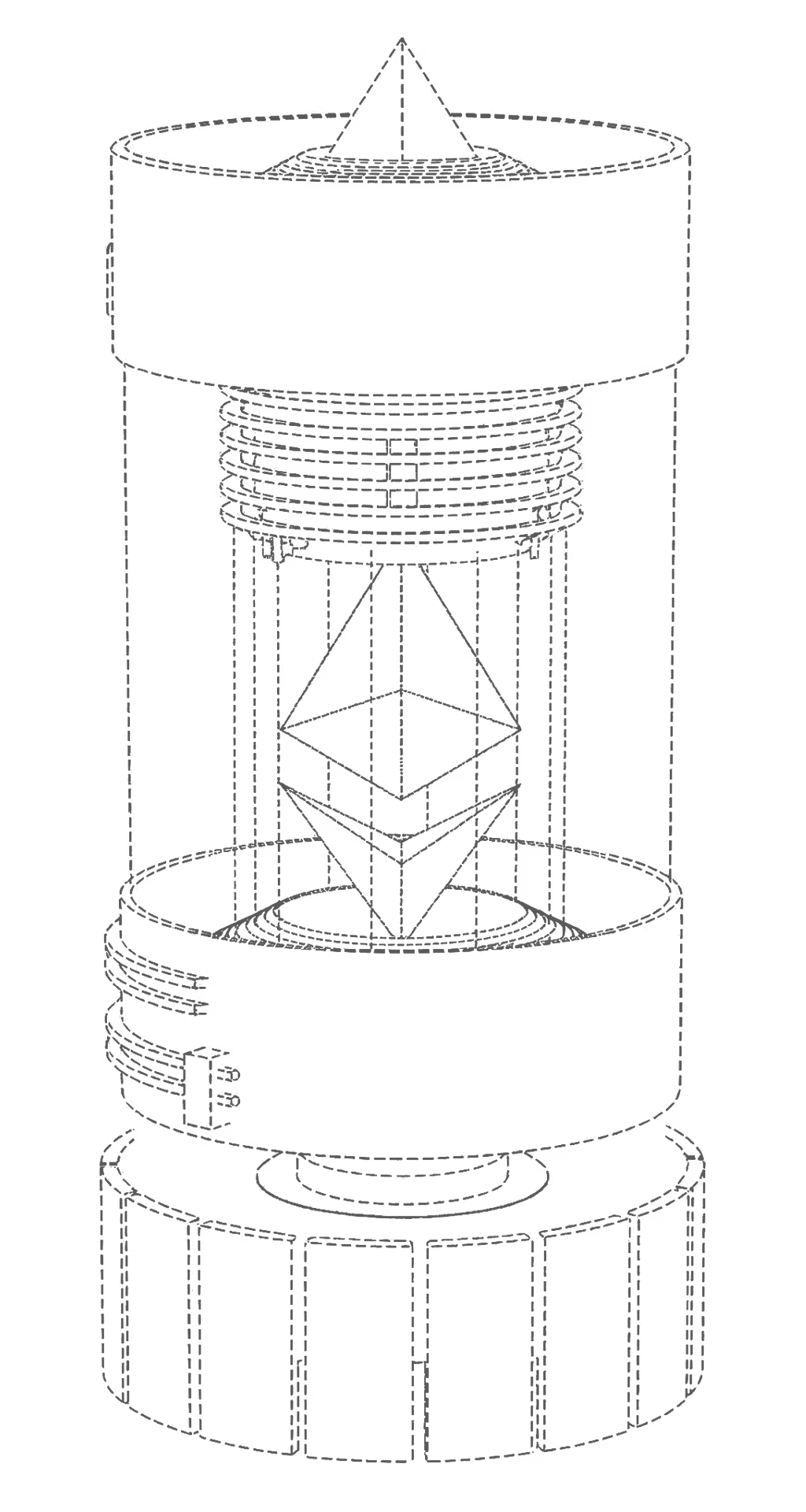
- CUSTODYOne Vault Per LaunchEach project is issued its own segregated vault at a published address. There is no shared reserve, no cross-collateralization, and no mechanism by which one launch can be drained to rescue another.
- REDEMPTIONRedemption Is a RightHolders can burn tokens against their pro-rata share of the basket at any time. Redemption is enforced by the vault contract and does not depend on a team choosing to honor it.
- VESTINGFounders Earn ForwardThe raise capitalizes the vault first. Founders draw against delivered milestones on a schedule published before the launch opens, so compensation follows the work rather than preceding it.
- PROOFEverything Is CheckableVault addresses, basket composition, backing ratio, and the full redemption history are public from the first block. Nothing about a launch here requires taking our word for it.


A floor changes the downsideBacking does not make a project succeed. It does put a number underneath it. Holders stop being purely exposed to sentiment and start owning a claim on assets that demonstrably exist.
ETFs are the deepest collateral availableBroad-market funds trade continuously against real order books. As collateral they price cleanly, they absorb size, and their value is uncorrelated to the launch they happen to secure.
Tokenization makes the basket provableWhen the fund position itself sits on-chain, the reserve stops being a quarterly attestation from an auditor. It becomes an address anyone can read at any moment, without asking permission.
Backing widens who can participateAllocators who cannot justify an unbacked token can often justify a collateralized one. A floor is what makes a launch legible to capital that operates under a mandate.
The Shorolink Vault Standard
FAQ
Vaults are deployed on Robinhood Chain (chain ID 4663). Every vault address is published with its launch, so backing can be read directly from the chain rather than taken on trust.
In a normal launch, the money raised goes to the team and the token is a claim on nothing. Here the money capitalizes a vault, the token is a claim on that vault, and the team draws from escrow only as milestones are met.
The practical difference shows up when a project stalls. An unbacked token is worth whatever sentiment says it is, which is usually very little. A backed token still holds its basket, and redemption still works.
If all you want is index exposure, buy the index — that is genuinely the better trade. A backed launch is for when you want exposure to a project as well, and want the downside of that bet to stop at the collateral rather than at zero.
Backing per token is the vault basket value divided by tokens outstanding. It is the amount you receive per token if you redeem, and comparing it against market price tells you exactly what premium you are paying for the project itself.
Any project willing to meet the Vault Standard: fund a vault from the raise, publish a milestone schedule before opening, accept escrowed founder allocations, and leave redemption permanently open. Applications are reviewed against that same checklist regardless of size or sector.
Every live vault is published with its address, basket and backing ratio. You can read the underwriting rules in the Vault Standard, review each launch in the launch notices, and track backing across every vault on the vault dashboard, or follow us on X. For founder inquiries, please contact us at launch@shorolink.xyz.